Physical Address
304 North Cardinal St.
Dorchester Center, MA 02124
Physical Address
304 North Cardinal St.
Dorchester Center, MA 02124

My trekking poles have seen more weather than my umbrella. I’ve hiked into Ghorepani with rhododendrons dropping petals on my pack like confetti, and I’ve sat in a Namche teahouse listening to sleet hammer a tin roof, wondering why I hadn’t just checked a calendar before booking flights. Nepal will teach you, sooner or later, that “when” matters almost as much as “where.”
So does it really matter when you go, or is that just something trekking agencies say to get you to book early? I dug into the weather data, the trail reports, and what guides who’ve spent decades on these routes actually tell their clients – and the short answer is: yes, timing changes almost everything about a Nepal trek, from the views you get to the number of people you’ll be sharing a teahouse dining hall with.
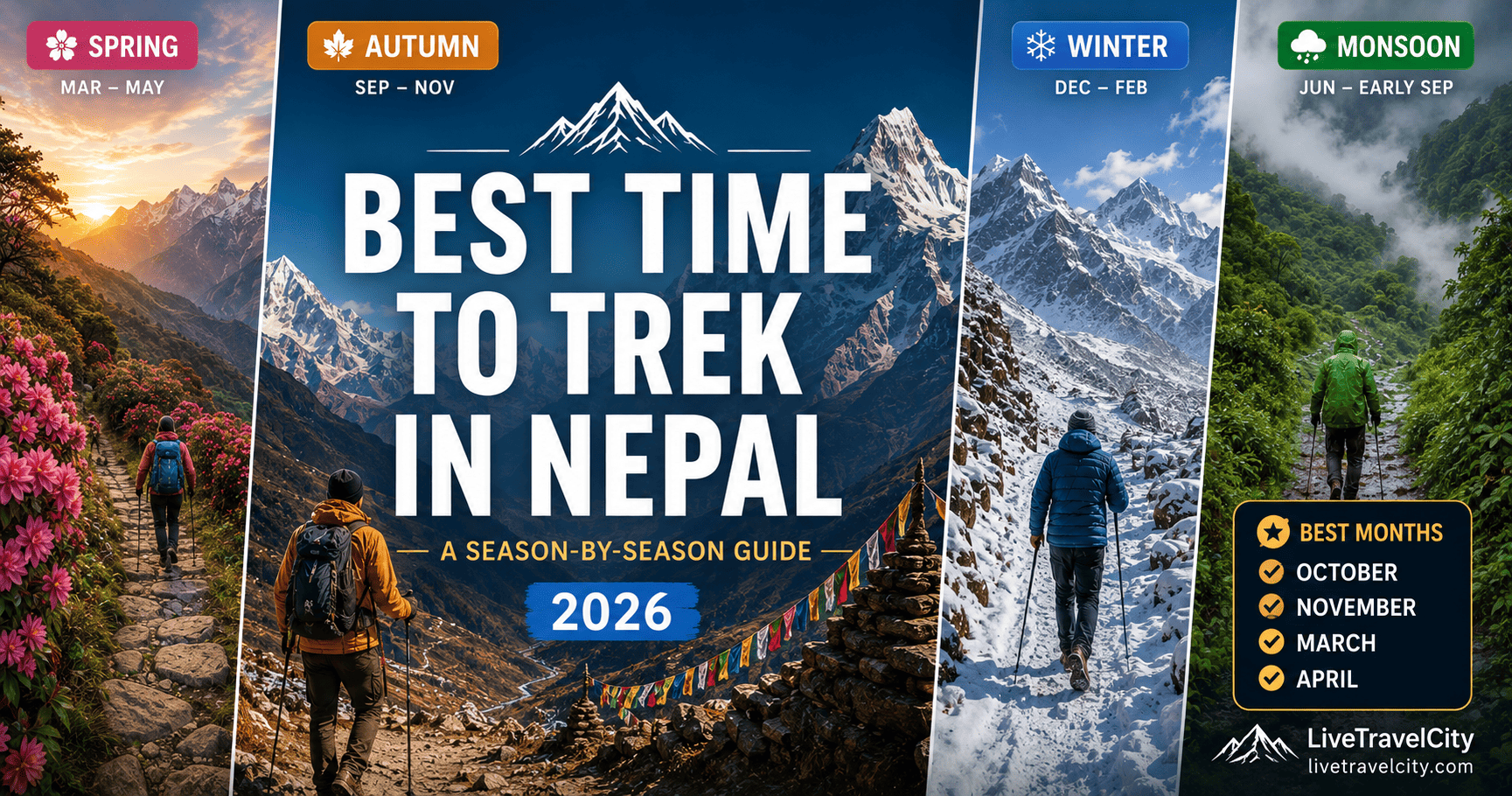
If you want the single most reliable answer, it’s this: October and November (autumn), and March and April (spring) are the best months to trek in Nepal. These four months deliver the most stable weather, the clearest mountain views, and open trails across every major region – Everest, Annapurna, Langtang, and Manaslu.
Everything else in this guide is really just the fine print on that headline.
Autumn is what most trekking outfitters mean when they say “peak season,” and it earns the title honestly. The monsoon clouds clear out by late September, leaving the sky scrubbed and the valleys a deep, saturated green.
October is generally considered the single best month to trek in Nepal. The post-monsoon air is dry, dust hasn’t yet built up on the trail, and mountain visibility is about as good as it gets – you can expect to see peaks like Everest and Annapurna in sharp, cloud-free detail on most days. The tradeoff is crowding: teahouses along the Everest Base Camp and Annapurna Circuit routes fill up fast, and it’s worth booking accommodation and permits well in advance if you’re set on October.
November stretches that same window a little further. Early November is nearly as clear as October but noticeably quieter, since the crowds start to thin as temperatures drop. By late November, nights above 3,500 metres get properly cold, and some high passes may start seeing snow – so if you’re set on this month, aim for the first three weeks.
Best for: first-time trekkers, anyone who wants reliably clear mountain photos, and those willing to trade a bit of solitude for the best possible weather.
Spring is autumn’s rival for the top spot, and depending on what you care about, it might edge autumn out. Where autumn is about clarity, spring is about colour: rhododendron forests bloom across the mid-hills from March into April, turning trails like Ghorepani-Poon Hill and Mohare Danda into corridors of red and pink.
Days are also longer and warmer than in autumn, giving you more comfortable trekking hours and slightly milder evenings at altitude. April in particular is a strong contender for the best single month of the year, rivalling October for stability, and it’s also when Everest expedition season is in full swing – so don’t be surprised to pass colourful base camps and climbing teams on your way up.
The catch is haze. As spring progresses toward May, warm air and agricultural burning in the lowlands can build up a light haze that softens mountain views, especially in the afternoons. Early spring mornings tend to be your clearest window.
Best for: trekkers who want warmth, flowering trails, and don’t mind slightly hazier long-distance views in exchange for colour and comfort.
They’re not “wrong” seasons – they’re specialist seasons.
Winter (December to February) is cold, especially at altitude, where nighttime temperatures at places like Everest Base Camp can drop to -15°C or lower. But the trade-off is real: near-empty trails, rock-bottom prices, and skies that are often crystal clear precisely because the cold air holds so little moisture. Lower-altitude treks like Poon Hill, Mardi Himal, and parts of Langtang Valley stay very doable through winter. High passes like Thorong La on the Annapurna Circuit can close after heavy snow, so this season suits experienced, well-equipped trekkers more than first-timers.
Monsoon (June to early September) is, for most of Nepal, the season to avoid. Trails turn to mud, leeches come out below 2,000 metres, and low cloud can block mountain views for days at a time. There’s one notable exception: rain-shadow regions like Upper Mustang, Nar Phu Valley, and Dolpo sit north of the Himalayan crest and stay largely dry even while the rest of the country floods. If a summer trip is your only option, that’s where to point your itinerary.
| Trek | Best months | Also workable |
|---|---|---|
| Everest Base Camp | October, November, March, April | Early December, late February |
| Annapurna Base Camp | October, November, March, April | Early winter, late spring |
| Annapurna Circuit | October, November, April | December–February (lower sections only; Thorong La may close) |
| Langtang Valley | March–May, October–November | December (lower altitude) |
| Upper Mustang / Nar Phu | June–August | Also fine in autumn/spring |
| Poon Hill / Ghorepani | Year-round | Best in March–April for rhododendrons |
1. Altitude changes the rules. A “good” month at 2,800 metres can be a genuinely difficult one at 5,000 metres. If you’re heading toward Everest Base Camp or over a high pass, weight your decision toward the more stable autumn and spring windows rather than stretching into early winter or late spring.
2. Weather patterns are shifting. Guides who’ve worked these trails for years increasingly note that monsoon onset and withdrawal have become less predictable, with unseasonal late-monsoon rain showing up in October in recent years. Build a couple of buffer days into any itinerary, whatever month you choose, and check conditions close to departure rather than relying on the seasonal averages alone.
3. Crowds are a real cost. October and April are stunning, but they’re also when Everest Base Camp and Annapurna Circuit teahouses can be fully booked out months ahead. If you’d rather trade a slightly higher chance of haze or cold for empty trails and your pick of teahouse rooms, the shoulder weeks — early November, or the first half of March — are worth serious consideration.
Is October really the best month to trek in Nepal? For most people, yes. It combines the clearest post-monsoon skies with stable, dry trail conditions across nearly every region. The main downside is that it’s also the busiest month, so book teahouses and permits early.
Can you trek in Nepal in winter? Yes, particularly on lower-altitude routes like Poon Hill or the lower stretches of Langtang. High-altitude routes and passes become more challenging and sometimes close due to snow, so winter treks above 4,000 metres are best left to experienced, well-equipped hikers.
Is spring or autumn better for Everest Base Camp? Both work well. Autumn tends to offer clearer, sharper mountain views; spring brings warmer days and rhododendron blooms lower on the trail, along with the extra atmosphere of expedition season at Base Camp itself.
Should I avoid monsoon season entirely? For most classic routes, yes — trails get muddy, leeches appear at lower elevations, and clouds frequently block mountain views. The exception is rain-shadow regions like Upper Mustang and Dolpo, which stay dry and trekkable right through summer.
Planning is half the trek. Whatever month you choose, build in a few flexible days, check trail and pass conditions close to your departure date, and pack for temperatures a little colder than the averages suggest — the Himalayas rarely follow the script exactly.