Physical Address
304 North Cardinal St.
Dorchester Center, MA 02124
Physical Address
304 North Cardinal St.
Dorchester Center, MA 02124

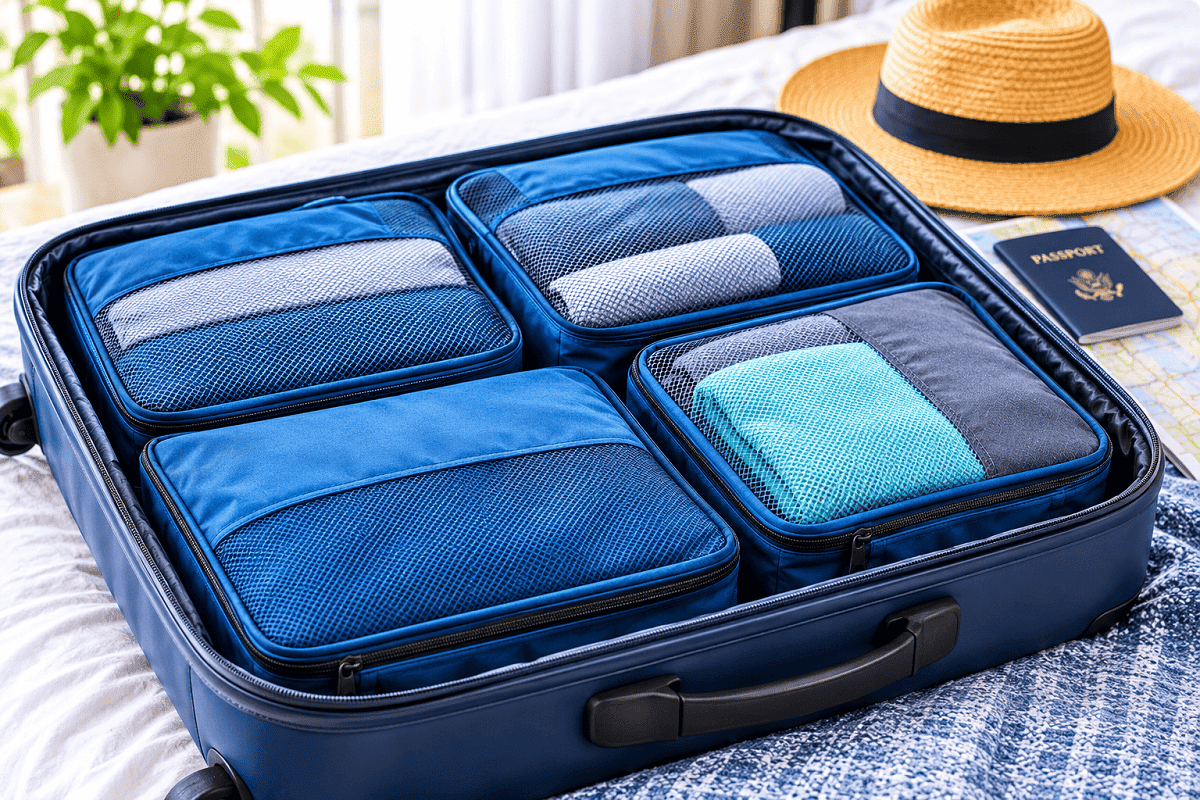
Packing cubes are lightweight, zippered fabric pouches, usually rectangular and often with a mesh panel, that sit inside a suitcase or backpack and split it into compartments, like a set of drawers you can carry. You’ll also see them sold as packing organizers, travel cubes or luggage cubes. Below, I’ll cover how they work, what they’re made of, whether they really save space, and who can happily skip them.
Think of the way you organize a wardrobe at home: socks in one drawer, T-shirts in another, the good sweater on its own shelf. A packing cube brings that logic on the road. Instead of one big open space where everything slides into everything else, you get smaller, self-contained units that stack neatly together.
If you’ve ever hiked, you may know stuff sacks [soft drawstring bags used to bundle gear in a backpack]. Packing cubes are the suitcase traveler’s cousin: same idea, but with a zipper, a more regular shape and, usually, a see-through panel.
Some cubes aren’t even cube-shaped. Slim ones, flat ones and clamshell styles [cubes that open like a book] all count. And the idea isn’t only for clothes: cables, toiletries, camera gear and dirty laundry all happily live in them.
The trick is containment. Loose clothes spread out, shift around and leave awkward gaps in your bag. Put the same clothes in a cube and they become a tidy block that stays where you put it, even when your suitcase gets tipped upright or tossed around in transit.
In practice, it’s a three-step habit:
The payoff shows up later. When you need a clean T-shirt on day four, you pull out one cube instead of unpacking the whole bag onto a hotel bed. Some travelers call this “inception packing”, because it’s literally a bag inside a bag.
It matters more than you’d think, especially if you plan to use them for years.
Most cubes are made from nylon or polyester, thin and light, and an empty cube weighs anywhere from about 2 ounces to a pound. Better ones use ripstop [a woven fabric with reinforcing threads that stops small tears from spreading], and some add a water-resistant coating, handy when a water bottle leaks or your bag meets a rainy platform. A mesh panel on the lid lets you see inside without unzipping and lets damp items breathe a little.
The quiet hero is the zipper. A cube with a broken zipper is just an expensive piece of fabric, so it’s worth checking reviews for zipper durability before you buy. Stiffer, padded or plastic cubes exist too, and they’re useful for protecting fragile items like camera gear, though they don’t squish into odd gaps the way soft fabric does.
This is where travel advice gets suspiciously contradictory, so let’s be straight about it.
Regular packing cubes mostly organize. They don’t shrink your clothes. What they do is cut wasted space, because tidy, evenly shaped blocks pack better than a pile of loose items. One long-term traveler who tests this on the road estimates the gain at roughly 5 to 10 percent, and that’s a personal estimate, not a lab result. Your savings will depend on your clothes, your bag and how well you pack.
Compression cubes are different. They add a second zipper that squeezes the air out after you close the cube. The same traveler puts the volume savings at around 20 to 30 percent, again as an estimate. They work best on soft items like T-shirts, sweaters and activewear, and less well on stiff denim or bulky coats.
There’s a catch, of course:
One brand’s advice, which seems fair to me: fill a compression cube to about 80 percent, so the second zip can close without a wrestling match.
| Regular cubes | Compression cubes | |
|---|---|---|
| Main job | Organization | Organization plus reducing bulk |
| Zippers | One | Two (main zip plus compression zip) |
| Space saved | Small | Noticeable, with soft fabrics |
| Flexibility | Soft, squishable | Can become stiff when compressed |
| Best for | Most travelers, short and medium trips | Carry-on-only packers, bulky layers, long trips |
| Watch out for | Little real compression | Wrinkles, extra weight, overpacking |
If you’re new to all this, start with a cheap set of regular cubes. If you love them and find yourself fighting for every centimeter, upgrade to compression later.
Sizes vary by brand, so treat this as a rough guide and check the dimensions on any set you’re eyeing.
| Size | What goes in it | Rough capacity |
|---|---|---|
| Small | Socks, underwear, chargers, small accessories | About 6 liters (around 30 × 20 × 10 cm) |
| Medium | T-shirts, shorts, lightweight layers | About 13 liters |
| Large | Sweaters, pants, bulkier items | Varies by brand |
A useful rule: several smaller cubes slot into gaps more easily than one giant one. And try not to buy a huge cube for a handful of items. You’ll waste space and add pointless bulk.
Fewer than the marketing suggests. Most sets come with three (small, medium, large), and for a lot of people that’s the sweet spot.
A slightly annoying truth: the more cubes you own, the more you’ll bring. “Less is more” applies here.
Honestly? Plenty of people.
If you’re unsure, a cheap set is a low-risk experiment. You’ll know within one trip whether they’re your thing.
A few cheaper ideas:
None of these is as tidy as a proper cube, but they’re fine to try before you commit.
Yes, and that’s half the charm. People use them for crochet supplies, linens and off-season clothes at home, for sorting gym gear, and for keeping a beach bag sand-free and dry (see our beach packing list). Parents love them for diapers, spare outfits and snacks in the car.
They also help on cruises, where cabin drawer space is tight: pull out the cubes you need and leave the rest in the suitcase. Our cruise packing list covers what else to bring.
A clean-and-dirty cube is a classic trick on the road: keep one cube just for worn clothes so nothing smelly touches your clean stuff.
Surprisingly few people ask this, and it matters. Cubes live next to your socks, so they pick up dust, crumbs and the occasional leaked shampoo. Most fabric cubes are machine washable, so check the care label, use a gentle cycle and let them air dry. Plastic ones just need a wipe-down.
A good habit: wash them when you get home, before they go back in the closet. Your next trip will thank you.
What are packing cubes used for? Organizing clothes and small items inside a suitcase or backpack, so you can find things fast and keep clean and dirty clothes apart.
Are packing cubes worth it? For frequent travelers, long trips and families, usually yes. For very light packers on short trips, probably not.
Should you roll or fold clothes in packing cubes? Rolling saves space and reduces creases for casual fabrics. Fold structured items like dress shirts.
Do packing cubes cause wrinkles? Regular cubes tend to reduce them. Heavily compressed ones can create sharp creases.
Can you use packing cubes in a backpack? Yes, though rectangular cubes leave gaps in round packs, so fill those with a jacket or shoes.
If you travel often, change hotels, or share a bag with someone who packs differently than you, packing cubes are one of the cheapest upgrades in travel. If you pack light and go away for a night or two, you can safely skip them. Either way, the best test is simple: borrow or buy a small set, pack one trip, and see how it feels.